4 Unique Experiences You Can Only Have in Michigan (2026 Guide)
 Editorial Team
From a car-free island frozen in the Victorian era to America's only freshwater shipwreck sanctuary, Michigan delivers experiences you literally cannot find anywhere else.
Michigan sits on more fresh coastline than any other state in America. With four of the five Great Lakes touching its shores, the state holds a geography that produces experiences found absolutely nowhere else. These are not just scenic stops—they are things you can only do here.
Whether you are planning a Great Lakes road trip or looking for destinations that go beyond ordinary tourism, Michigan's most distinctive offerings will change how you think about the Midwest.
1. Step Back in Time on Mackinac Island
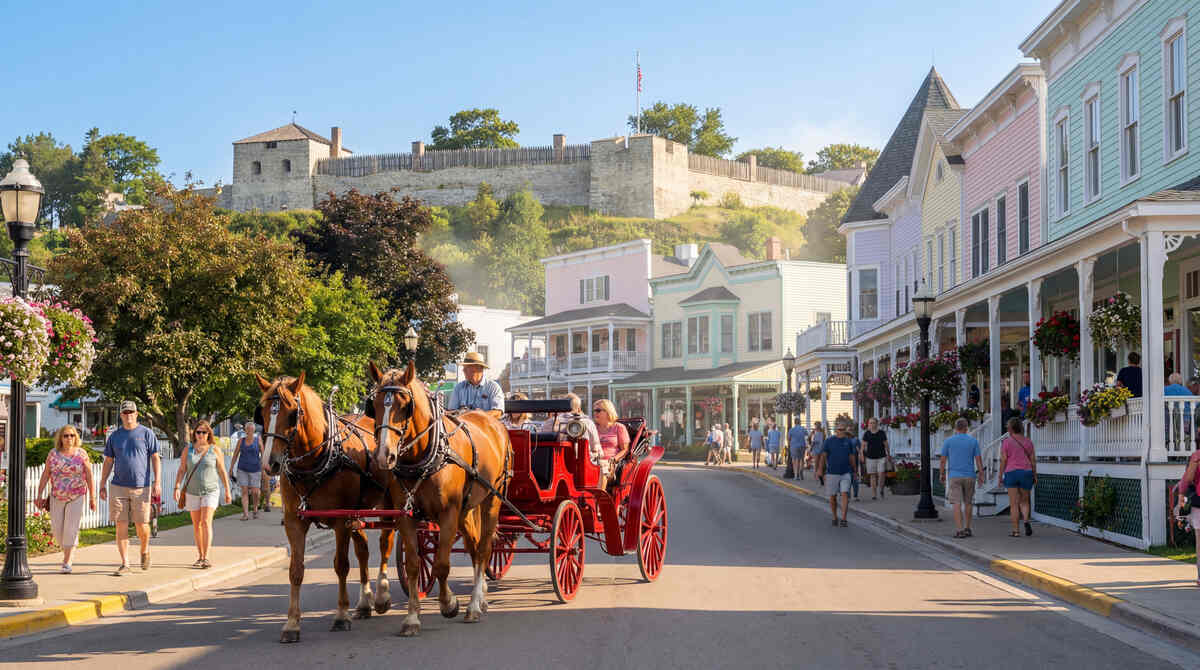
Mackinac Island is the only place in America where cars have been banned for over 125 years. Since 1898, motorized vehicles have been prohibited on this 3.8-square-mile island in Lake Huron, sitting between Michigan's Upper and Lower Peninsulas. The only exceptions are emergency vehicles and the occasional snowmobile in winter.
What makes it one of a kind: Transportation here is by horse-drawn carriage, bicycle, or on foot. The clip-clop of hooves on pavement is the island's soundtrack, and the absence of engines creates a stillness that feels almost surreal. M-185, the road circling the island, is the only state highway in America where motorized vehicles are not allowed.
The island's Victorian character runs deep. The Grand Hotel, opened in 1887, still commands attention with one of the longest front porches in the world. Fort Mackinac, built by the British in 1780, overlooks the harbor from limestone bluffs. More than 80 percent of the island is preserved as state parkland, and the entire island is a National Historic Landmark.
Don't miss: Walking through Arch Rock, a natural limestone formation standing 146 feet above the ground. In the evening, watch the sunset from the fort while the Straits of Mackinac glow beneath you.
When to go: The island is busiest from June through August. May and September offer quieter streets and lower hotel rates. Ferries run from both Mackinaw City and St. Ignace. While you are there, stop at one of the island's famous fudge shops—Mackinac Island has been called the fudge capital of the world, and visitors have been nicknamed "fudgies" for over a century.
Insider move: Rent a bike and ride the full 8-mile perimeter road early in the morning. You will have the shoreline views almost entirely to yourself before the day-trippers arrive on the first ferry.
2. Climb the Dunes That Earned the Title "Most Beautiful Place in America"
In 2011, Good Morning America named Sleeping Bear Dunes National Lakeshore the most beautiful place in America. The title was not an exaggeration. This 35-mile stretch along Lake Michigan's eastern coast is home to perched dunes—massive walls of wind-blown sand sitting atop ancient glacial deposits—that rise hundreds of feet above turquoise water.
What makes it one of a kind: These are not ordinary sand dunes. They are perched dunes, a geological formation where a thin layer of sand sits on top of an enormous glacial moraine left behind 10,000 to 14,000 years ago. The result is a landscape that feels more like the Caribbean set against a forested Great Lakes backdrop. The park also includes North and South Manitou Islands, accessible only by ferry from the village of Leland.
The dune climb is the signature experience—a steep wall of sand that gives way to a 3.5-mile trek across open dunes to the Lake Michigan shore. From the top, the views stretch across Glen Lake, the Manitou Islands, and miles of undeveloped coastline.
Don't miss: The Pierce Stocking Scenic Drive, a 7.4-mile loop through the park with overlooks that reveal the full drama of lake, dune, and forest meeting in one frame. Empire Bluff Trail is another favorite—a short hike that ends at a bluff with panoramic views of South Manitou Island and the Sleeping Bear Plateau.
When to go: Late June through early September offers the warmest weather for swimming and hiking. Fall colors in October are extraordinary. Winter brings cross-country skiing and a quiet beauty few visitors see.
Local tip: Kayak the Crystal River or Platte River for a gentler way to experience the lakeshore. Both are calm, shallow, and perfect for beginners.
3. Dive into a Freshwater Shipwreck Graveyard
Lake Huron's Thunder Bay National Marine Sanctuary is the only freshwater national marine sanctuary in the United States. Spanning 4,300 square miles near the city of Alpena, it protects roughly 116 historically significant shipwrecks—wooden schooners, steel freighters, and paddle steamers dating from the early 1800s through the twentieth century.
What makes it one of a kind: The cold, fresh water of Lake Huron preserves these wrecks in remarkable condition. Unlike ocean shipwrecks, which deteriorate quickly from salt water and marine organisms, these vessels remain largely intact. Some sit in water as shallow as 15 feet, making them accessible to snorkelers and novice divers. Others rest in deeper water, offering advanced divers a rare look at vessels that sank more than a century ago.
The Great Lakes Maritime Heritage Center in Alpena serves as the sanctuary's visitor hub, with exhibits on Great Lakes shipping history, a working archaeological conservation laboratory, and educational programs. Charter dive services operate throughout the summer, offering guided trips tailored to all experience levels.
Don't miss: The glass-bottom boat tours, which let non-divers peer down at shipwrecks in crystal-clear water. For divers, the wreck of the SS Pewabic—a Civil War-era steamer that sank in 1865 with a cargo that reportedly included copper—is a highlight.
When to go: Diving season runs from June through September, with the best visibility typically in July and August. The Heritage Center is open year-round.
Safety note: Lake Huron's water temperature stays cold even in summer. Wetsuits or drysuits are essential for diving. Always book through a licensed charter service and follow sanctuary guidelines to protect the shipwrecks.
4. Kayak Past 200-Foot Painted Cliffs at Pictured Rocks
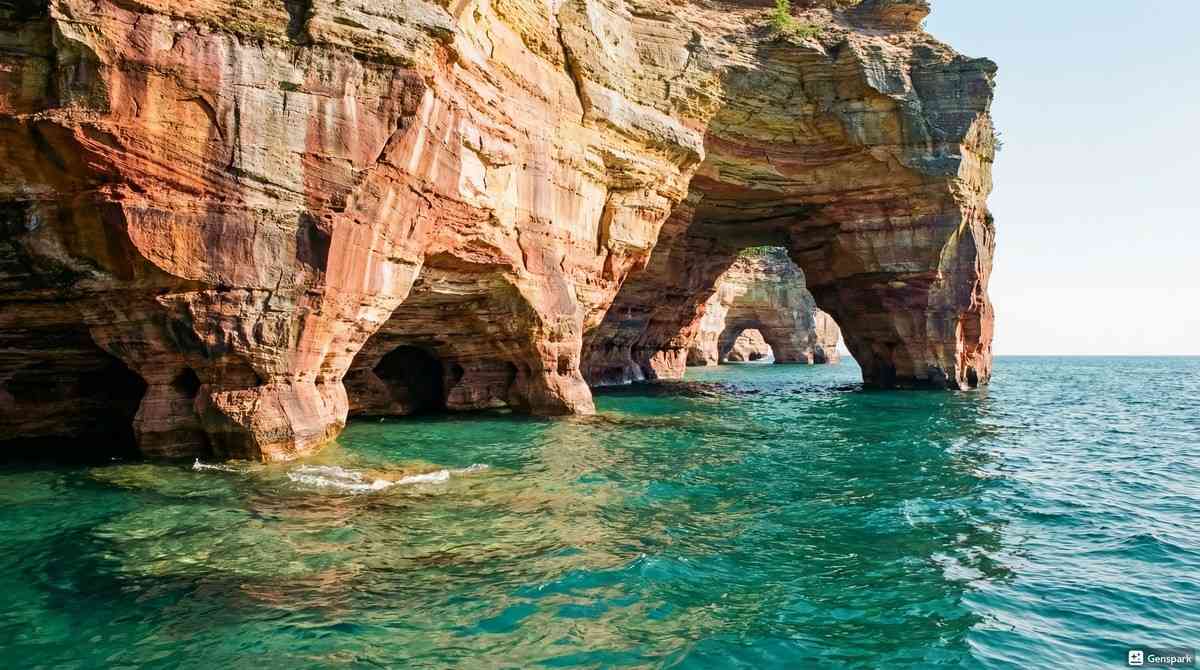
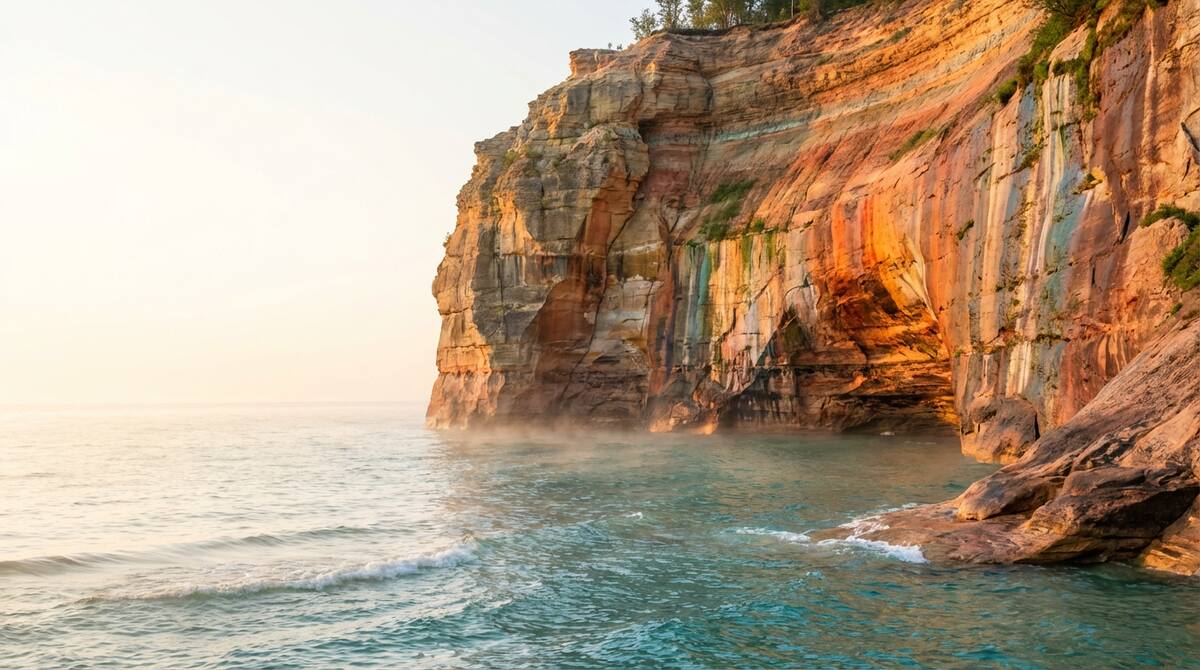
Pictured Rocks National Lakeshore stretches 42 miles along the south shore of Lake Superior in Michigan's Upper Peninsula. Designated in 1966, it was the first national lakeshore in the United States. The centerpiece is 13 miles of towering sandstone cliffs that rise up to 200 feet above the lake, streaked with vivid bands of color from mineral deposits—iron reds, copper greens, manganese blacks, and limonite yellows.
What makes it one of a kind: No other lakeshore in America combines painted cliff faces, arched rock formations, sea caves, and waterfalls in a single stretch. The rock is Cambrian-period sandstone, roughly 500 million years old, sculpted by wind, waves, and freezing cycles into formations that resemble castle turrets, shallow grottos, and natural portals.
Kayaking along the base of the cliffs is the most immersive way to experience them. From the water, you pass through towering archways, paddle into shallow caves, and see the full height of the cliff face rising directly overhead. Boat tours from Munising offer a less strenuous alternative, with narrated cruises that cover the full cliff section.
Don't miss: Chapel Rock, where a tree clings to the top of a detached sea stack, its roots stretching across a gap to the mainland cliff. On the eastern end of the park, the Grand Sable Dunes rise 275 feet above Lake Superior—another perched dune formation unique to Michigan's Great Lakes coast. The park also has waterfalls, including the 50-foot Munising Falls and the stunning Spray Falls, best viewed from the water.
Winter visitors take note: Pictured Rocks transforms into one of the best ice-climbing destinations in the country. Constant snowmelt and subfreezing temperatures create over 50 named ice formations along the cliffs, drawing climbers from across the Midwest and beyond.
Quick Planner: Michigan's Can't-Miss Experiences
Why Michigan Deserves a Spot on Your 2026 Travel List
Michigan does not market itself with the flash of coastal resort states or the altitude of mountain destinations. Its appeal is quieter and more layered—a car-free island where time has genuinely slowed, dunes that rival any beach on Earth, a graveyard of shipwrecks preserved in freshwater, and painted cliffs that look like the work of a muralist rather than a glacier.
These four experiences exist only here. Each one rewards the traveler who makes the effort to reach it, and together they make a strong case for Michigan as one of the most underrated adventure states in the country. Whether you dedicate a full week to a Great Lakes circuit or pick just one destination for a long weekend, you will come home with stories that no other state can offer.
Frequently Asked Questions
Summer (June-September) is ideal for all four experiences. Mackinac Island and Sleeping Bear Dunes are best June through August. Thunder Bay diving peaks in July and August. Pictured Rocks offers kayaking in summer and ice climbing in winter.
Related Articles
Florida's 4 Hidden Gems Even Locals Don't Know About (2026 Guide)
05 Best Colorado Mountain Towns in 2026, According to a Lifelong Local
Florida’s Mostly-Underwater National Park: The Biscayne Secret Few Visitors Notice